
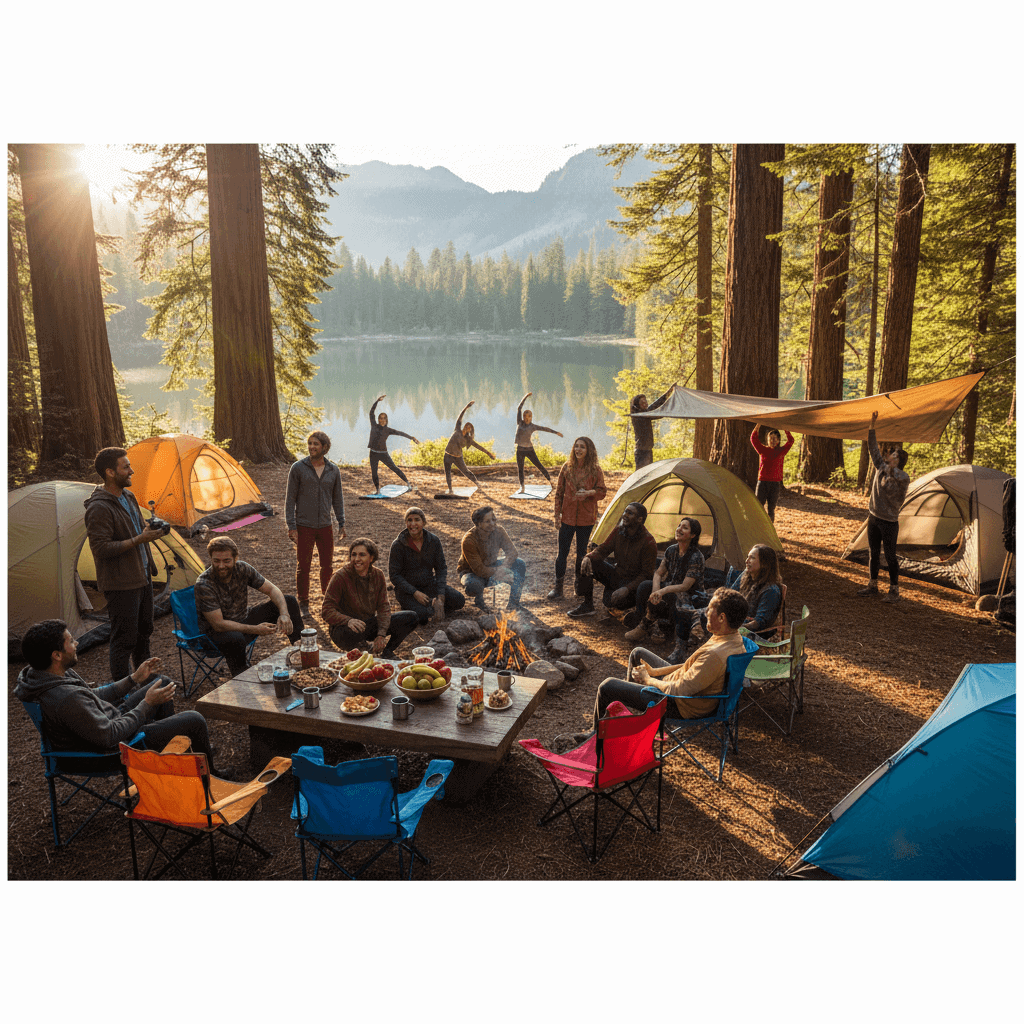
Group camping retreats offer more than just a break from screens. They let people relax, get moving, chat, and work together on simple outdoor chores that boost both body and mind. Being in nature and putting everyday roles on pause for a few days often brings back sharper thinking and fresh energy. This text shows why those changes occur and how to plan a trip that makes sure everyone enjoys and benefits from the time spent together. Keep reading to discover how a well-planned trip can transform the way you connect and recharge.
Whether you lead a workplace outing, organize a family reunion, or plan a trip with friends, the group setting changes the experience in useful ways. Shared meals, joint navigation of campsite chores, and unstructured social time around a fire create opportunities for connection that are hard to replicate at home. Below you will find practical tips, examples, and insights into the effects of group camping on wellbeing with advice you can use when planning your next retreat.
Get Rejuvenated Why Group Camping Retreats Improve Wellbeing
When people talk about feeling rejuvenated after a group camping retreat they point to a mix of physical rest and social renewal. Time outdoors reduces sensory clutter which lowers mental fatigue. The rhythm of steady daylight, sleep outdoors, and basic tasks establishes a predictable day that many find calming. Add shared experiences and the result is a potent combination for restoring energy.
Practical example. A mixed age group that spends three nights at a lakeside campsite often reports better sleep quality and more positive mood on follow up surveys than comparable individuals who stayed home. The reasons include slightly increased physical activity, more face to face interaction, and removal of digital interruptions. Those simple changes add up fast.
Social connection and mental health gains from shared outdoor time
Group camping encourages interactions that are casual but meaningful. People tell stories while chopping vegetables, plan a short hike together, or sit in silence watching stars. Those moments strengthen trust and belonging which are central to mental wellbeing.
Shared rituals and creating belonging
Rituals are small predictable actions such as preparing a morning coffee together, setting up a communal pot for dinner, or holding a nightly check in. These rituals mark the retreat as a valued shared space and reduce social friction. They also create a sense of belonging that lasts beyond the campsite.
Reduced isolation through simple presence
For people who struggle with loneliness a group retreat can be especially helpful. Proximity to others who are also present without expectation or judgement lowers social anxiety. For example a quiet walk with a fellow camper can open opportunities for meaningful conversation without the intensity of a formal sit down discussion.
Nature exposure and physical restoration that supports mood
Spending time in natural settings affects the nervous system in measurable ways. Research shows sitting in green or blue space reduces stress markers such as cortisol and can lower blood pressure. For many people those physiological changes translate into clearer thinking and better sleep which feed emotional health.
Tip for scheduling. Plan daily blocks of unstructured outdoor time rather than a rigid list of activities. A morning walk, an afternoon by the water, and a short evening stroll around camp give people repeated low intensity exposure which compounds benefits.
Shared responsibilities create calm and purpose
When a group divides basic tasks like cooking cleaning and gear organization the workload feels lighter and the shared goal of a smooth weekend can create cohesion. That shared purpose supports wellbeing by giving each person a clear role and a chance to contribute without pressure.
- Rotation of tasks keeps engagement fair and predictable.
- Short debriefs after meals help people voice appreciation and keep minor issues from growing.
- Simple role assignments for safety such as a checklist for the day hike reduce anxiety.
Example. A team of coworkers who set up a rotating meal roster and assigned tent leaders found fewer disputes and higher satisfaction with the trip than a similar team that left chores unstructured.
Movement and outdoor activities that improve mood and resilience
Physical movement in nature is often gentler on the mind than a gym workout. Hiking, swimming, and paddling increase endorphins and serotonin while offering sensory variety such as changing terrain views and natural sounds. For groups, choosing activities with different intensity options makes inclusion easier and prevents burnout.
Inclusive activity planning
Offer a mix of activity levels each day so participants can choose. A sample day could include a short nature walk, optional moderate hike, and an afternoon of light water play. This approach respects differing fitness levels and keeps spirits high.
Practical safety tips
Always plan for weather and have a simple emergency plan. Share the plan with group members and designate at least one person to hold a charged phone and first aid kit. Knowing there is a safety structure in place reduces worry and lets people relax more fully.
Mindful moments around the campfire and digital rest
Evening campfire routines invite quiet reflection. Stories, gentle music, or a guided breathing exercise create opportunities to slow down and process the day. Equally important is intentional digital rest. Encourage phones to be silenced or kept in a communal box during certain hours so the group can experience uninterrupted time together.
Tip. Start with a short digital rest window of a few hours and expand in future retreats as comfort grows. Many groups find the first full evening without screens is the most powerful.
Practical planning tips for a successful group camping retreat
Planning makes the difference between a chaotic weekend and one that truly refreshes participants. Start with a clear list of goals for the retreat such as improving team cohesion lowering stress or simply connecting with nature. Then pick a site that matches those goals and the skill level of the group.
Packing checklist
- Essentials such as shelter sleeping bags and layered clothing
- Communal items like a shared stove cooking utensils and lighting
- First aid kit sun protection and insect control
- Simple comfort items such as blankets and a low stool for fireside seating
Organizing roles and expectations
Assign clear roles such as meal lead safety lead and activity lead. Keep roles short and switchable so no one person feels stuck with a duty that limits relaxation. Communicate a flexible schedule that lists key windows for group activities and large blocks for individual free time.
For more detailed guidance on the benefits of group camping retreats and ideas for activities and roles please explore this topic which offers examples you can adapt to your group.
Meals rituals team building and simple menus that reduce friction
Shared meals are often the centerpiece of a successful retreat. Plan simple recipes that scale well and rely on a few core ingredients. One pot meals sheet pan dinners and build your own sandwich bars reduce prep time and increase conversation. Assign meal tasks in a rotation to keep energy even and let people contribute within their comfort zone.
- Breakfast idea. Oats with shared toppings and a communal coffee station.
- Lunch idea. Build your own wraps with fresh produce and protein options.
- Dinner idea. A communal stew or foil packet meal that everyone can help assemble.
Example. A family group that switched to a simple communal menu found more time for shared activities and fewer arguments about who should cook and who should clean up. The small change of simplifying menu design had a large effect on the group mood.
Planning with attention to comfort logistics and shared rituals sets the stage for a retreat that helps people recover from stress and return with clearer priorities. The social fabric woven during a group camping trip has value beyond the days of the retreat and can strengthen relationships at work and home.
Conclusion
Group camping retreats offer a practical path to renewed wellbeing through a mix of nature exposure movement social connection and simple shared responsibilities. The setting encourages better sleep light exercise and face to face conversation while rituals such as communal meals and fireside check ins create belonging. If you lead a group or are part of one consider planning a retreat with clear roles a flexible schedule and simple menus. Start small with a single overnight trip and include clear safety plans and options for different activity levels. After your first trip gather brief feedback to learn what worked and what you will repeat. When groups plan with intention and keep the focus on presence and comfort the result is often a meaningful reset for mental and physical health. Take the next step and set a date choose a site and invite your group to try a weekend away. You may find that the shared time outdoors becomes a regular part of maintaining wellbeing for everyone involved.