
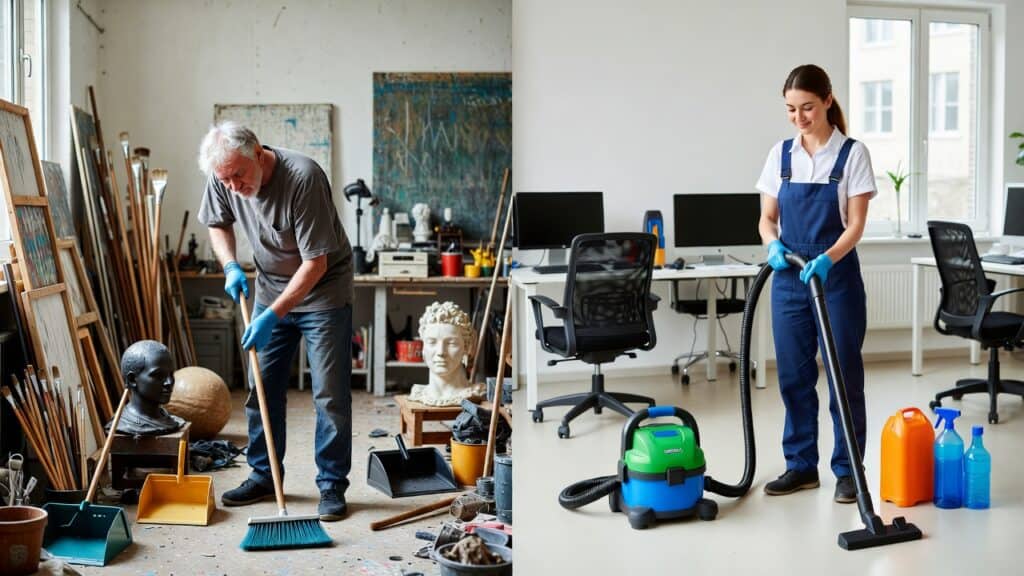
Facility managers, property owners, and office administrators often get puzzled when choosing between janitorial and commercial cleaning services. Both keep places neat and safe, but they handle different tasks and follow different schedules. Using simple language clears up the confusion and helps pick the right service for a space, budget, and health standards. Knowing these differences can save money and make a spot shine just right. Keep reading to uncover which choice fits best and why it matters more than you think.
This article breaks down the differences in scope, methods, supplies, staffing, and cost. You will get practical examples and tips to pick the right option for schools, retail stores, medical facilities, and corporate offices. The aim is to give actionable insight you can use in conversations with vendors and in procurement decisions.
What janitorial cleaning typically covers
Janitorial cleaning usually handles routine daily tasks that maintain appearance and basic hygiene. Tasks include emptying trash, sweeping, mopping, cleaning restrooms, wiping surfaces, and restocking consumables. These services are often scheduled for early mornings, late evenings, or overnight to minimize disruption.
Janitorial crews work from a checklist that focuses on high traffic areas and visible surfaces. For example a school janitorial team will focus on classrooms, cafeterias, hallways, and restrooms with an emphasis on quick turnaround and steady upkeep. The goal is steady cleanliness rather than deep removal of built up soils.
What commercial cleaning includes that differs from janitorial
Commercial cleaning tends to be more task specific and project oriented. It can include floor stripping and sealing, high dusting, window washing, deep carpet cleaning, upholstery cleaning, and post construction cleanup. These are periodic services that require specialized equipment and trained technicians.
In a retail environment commercial cleaning crews may perform evening deep cleans of display areas and stockrooms on a weekly basis. In a medical office commercial services might include steam cleaning of carpets and detailed disinfection of treatment rooms on a scheduled cycle. These activities complement daily janitorial work rather than replace it.
Equipment supplies and chemical differences
Janitorial teams typically use basic tools such as brooms, mops, vacuums, and general purpose cleaners. Supplies are chosen for quick use and safe storage. Commercial cleaning uses larger machines and more specialized products. Examples include low speed floor machines with pads for scrubbing, hot water extractors for carpets, and high reach window systems.
Choosing cleaning chemicals safely
Different cleaning tasks require different chemistries and contact times. For routine janitorial work a neutral cleaner may be fine for general surface cleaning. For deep cleaning or disinfection tasks a commercial grade disinfectant with a specified contact time is needed. Always check labels for dwell time and surface compatibility and keep safety data sheets on file.
Maintenance of equipment
Proper maintenance of machines extends their life and improves results. Simple practices like changing vacuum filters, inspecting pads on floor machines, and flushing out extractors after use reduce downtime. If equipment fails during a scheduled deep clean it can delay completion and increase cost.
Staff training and standards
Janitorial staff receive training focused on efficient rounds and basic safety. Training covers safe lifting, chemical handling, and infection control basics. Commercial cleaning technicians get additional instruction on machine operation, specialty chemicals, and protocol for sensitive spaces such as laboratories and healthcare areas.
Documentation matters. Professional commercial cleaning teams often follow written procedures, maintain service logs, and can provide before and after photos. Those records help facilities managers confirm work was completed to specification.
Scheduling frequency and flexibility
Janitorial services are usually scheduled daily or multiple times per week. The regular cadence makes them predictable and easy to budget. Commercial cleaning is planned by task and often scheduled weekly, monthly, quarterly, or as needed for special events or seasonal work.
Coordinating both services
Many sites benefit from a blended schedule. Daily janitorial staff handle the basics while commercial crews come in during off hours to perform heavier tasks. For example an office may have janitorial staff on site every weekday and a commercial team every Saturday night for floor care and carpet cleaning.
Adjusting frequency to usage
- High traffic lobbies may need daily attention plus monthly floor maintenance.
- Retail stores with seasonal peaks should plan additional commercial cleans before large sales periods.
- Medical and lab settings require more frequent disinfection and may have regulatory intervals to follow.
Cost structure and contract types
Janitorial contracts often use a flat monthly fee based on square footage and frequency. This predictable pricing covers routine tasks and standard supplies. Commercial cleaning pricing is typically task based. Deep cleaning projects have one time fees or are billed on a schedule depending on complexity and equipment needs.
When requesting bids compare scope details not only price. A low quote for janitorial work that excludes floor care or window cleaning will increase cost later when those services are needed. Ask for written scopes, sample schedules, and a list of included supplies so you can compare apples to apples.
How to choose between janitorial and commercial cleaning for your facility
Start with a walk through. Note stains, floor wear, high touch surfaces, and areas that attract dust. Determine the end goals for appearance and hygiene. A municipal office that values daily appearance might prioritize janitorial work with monthly commercial services. A restaurant or clinic may need more frequent commercial level cleaning for health reasons.
Ask potential vendors specific questions. Examples include how they handle hard to reach places, whether they supply their own equipment, and how they document completed tasks. Request references from similar facilities and review service level agreements carefully.
To get a local perspective and service options in Orlando reach out to a firm that lists detailed differences and service plans for both regular and project cleaning. One local resource worth reviewing is Freedom Cleaning Orlando which outlines common service models and sample schedules.
Practical tips for better procurement and vendor management
- Define measurable outcomes such as acceptable floor gloss levels, restroom inspection scores, or response time for emergency spills.
- Include termination and performance review clauses in contracts to keep expectations aligned.
- Schedule periodic joint inspections with providers to verify standards and update scopes when the facility changes use.
- Request product lists and safety documents for all chemicals and machines used on site.
- Consider trial periods for new vendors to evaluate communication and consistency before signing long term agreements.
Real examples help make the choice clear. A small law office may only need daily janitorial cleaning and quarterly carpet extraction. A supermarket will pair daily janitorial services with nightly commercial floor scrubbing. A university building housing a lab will insist on scheduled commercial level cleanings with certifications for chemical handling.
Choosing between janitorial and commercial cleaning is not an either or decision in many cases. Think in terms of a layered strategy where routine cleaning keeps spaces usable and scheduled commercial work addresses wear and deep soils. The right combination protects surfaces and keeps occupants healthy while managing cost over time.
Summary and next steps
Janitorial work maintains daily cleanliness and addresses visible needs. Commercial cleaning handles periodic and specialized tasks that require machines and trained technicians. When selecting services review scope documents, ask for references and sample schedules, and plan a blended approach for most busy facilities. Track performance with simple metrics and adjust frequency based on usage patterns.
If you are ready to create a cleaning plan for your space consider conducting a walk through with potential vendors and asking for a written proposal that lists tasks frequency supplies and pricing. That proposal will help you compare options and set clear expectations. Reach out to local providers for quotes and trial services to find the best fit for your needs.